A review of the evidence on cupping (vacuum therapy) in horses – explained for owners
Round marks on a horse’s back, or a humming machine gliding over the muscles: cupping has made its way from human sport into equine therapy. What can it really do, where is the evidence weak, and when is it not suitable? This review summarises 16 scientific papers on horses, dogs, sheep and people.
At a glance
- Only two studies have tested cupping on horses, and neither had a control or sham group.
- In 12 racehorses with back pain, sensitivity to palpation dropped straight after 10 minutes of machine cupping, but the difference was gone 10 minutes later.
- Pain threshold (algometer), heart rate variability and cortisol did not change.
- In dogs, cupping briefly warmed the skin and made it more stretchy.
- In people, real cupping often does no better than a convincing sham.
- Best use: a short, safe add-on to manual therapy and exercise – never instead of a vet’s diagnosis.
What is cupping?
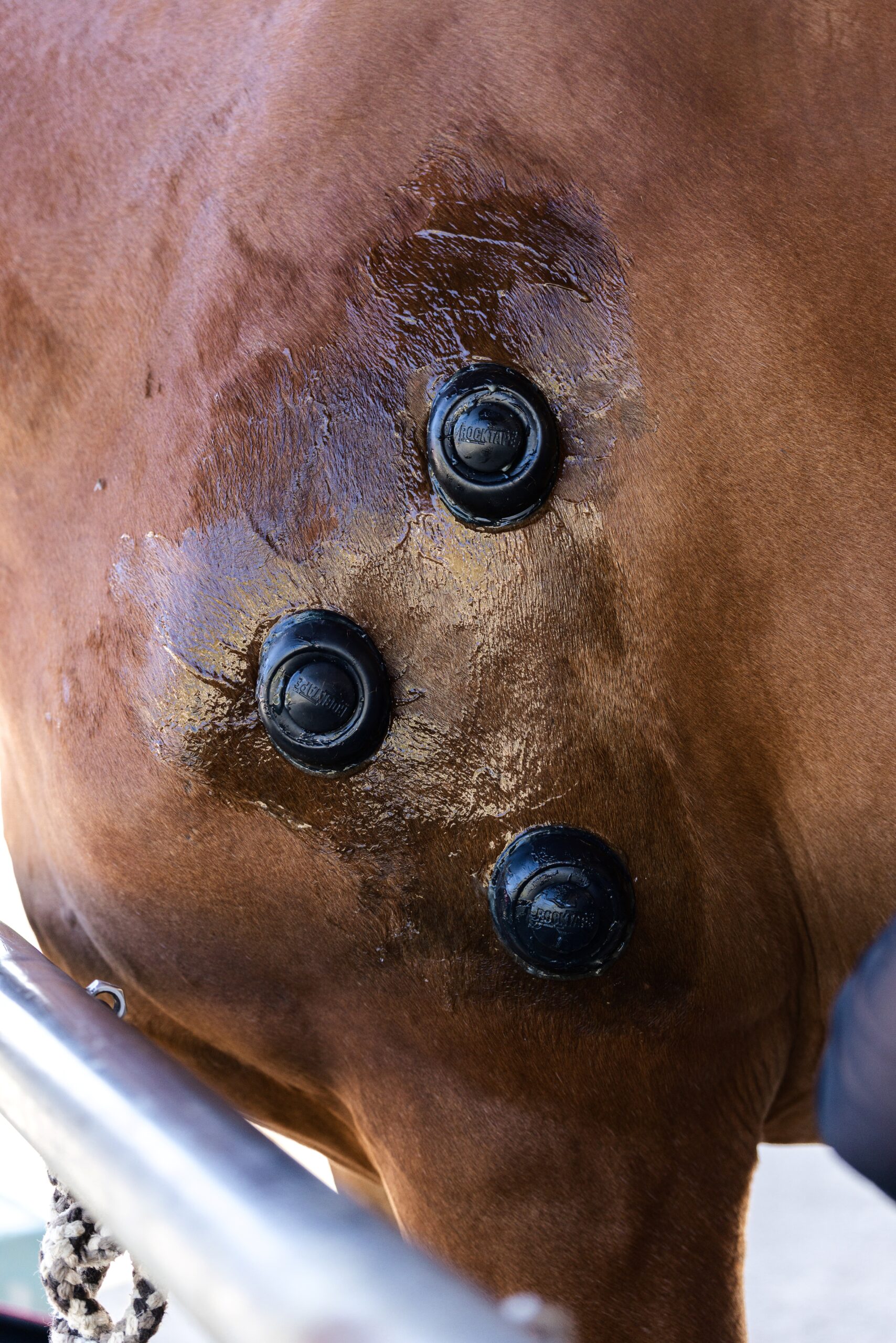
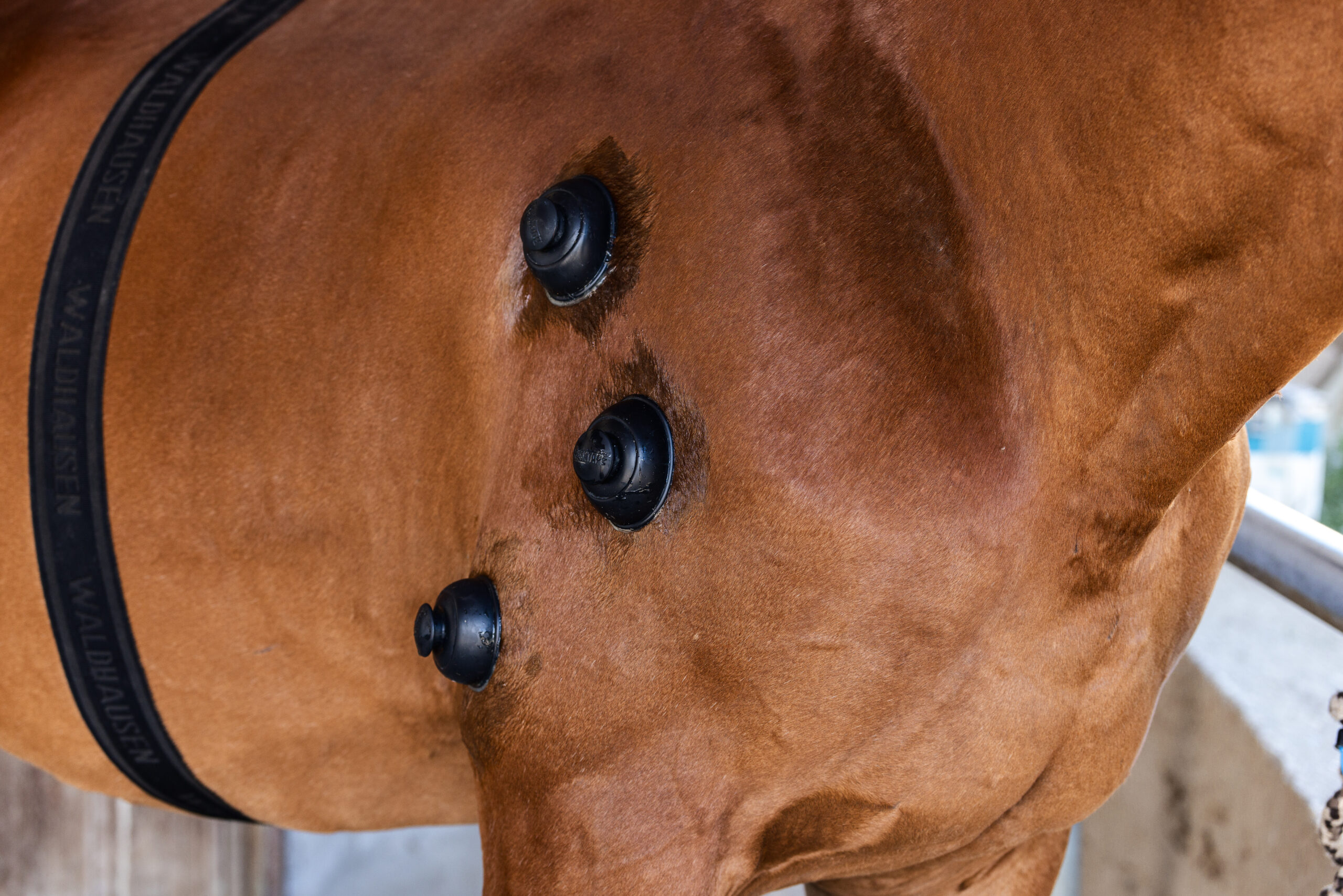
Cupping is one of the oldest known therapies. A cup is placed on the skin and a vacuum (negative pressure) inside it lifts the skin and the tissue beneath into the cup [5, 6]. Massage presses tissue together; cupping pulls it apart.
There are two main forms [5, 6]:
- Dry cupping: the skin stays intact. This is the form used in physiotherapy.
- Wet cupping (hijama): the skin is cut and blood is drawn into the cup. It is an invasive procedure with a higher risk of infection [6].
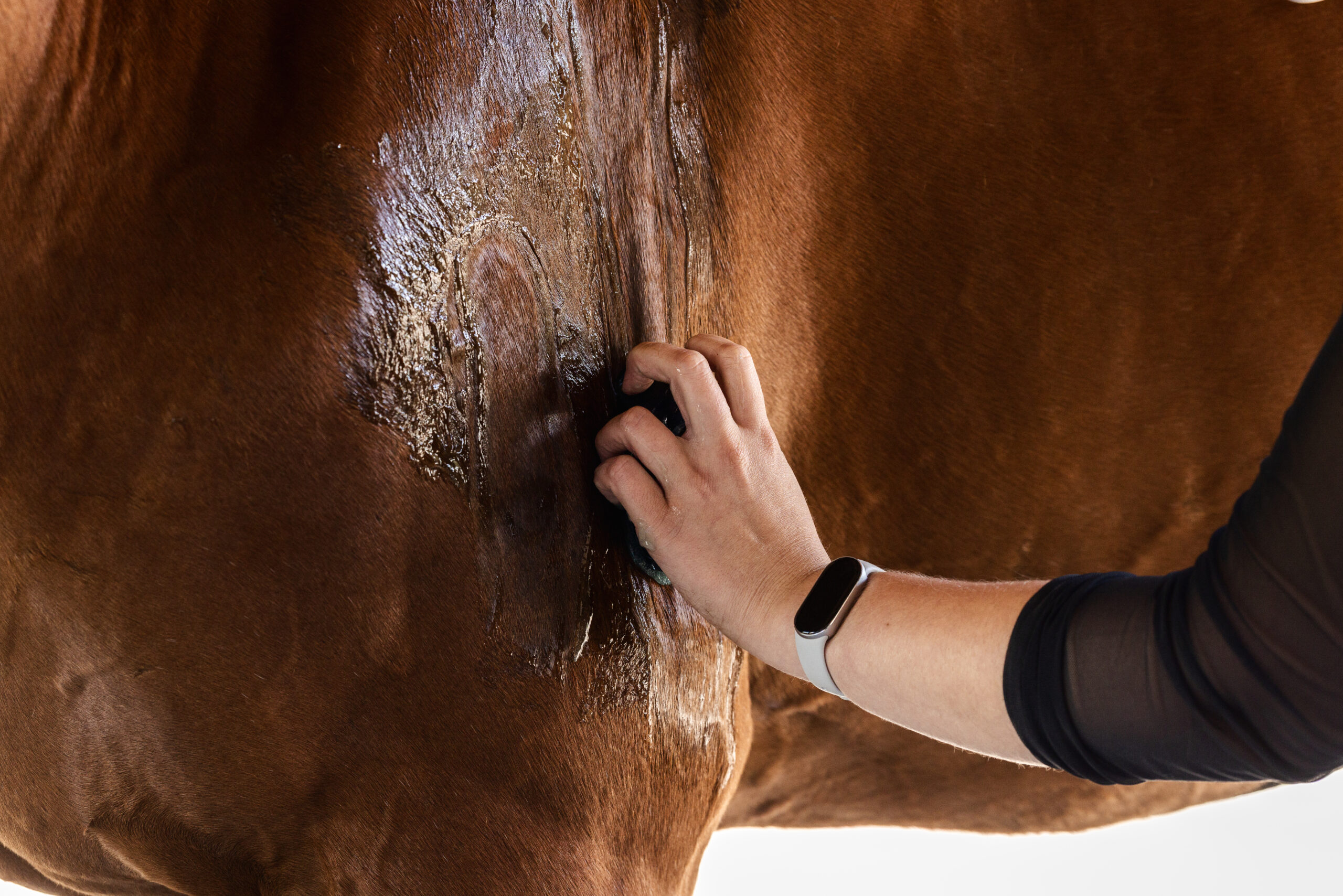
The vacuum is created with heat (fire cups), a hand pump, squeezable silicone cups or an electric device [6]. In sports medicine the technique is also called myofascial decompression; Japanese researchers working with horses and dogs call it dermal suctioning and use a machine whose cup is moved continuously over the area [1, 3].
The round red or purple marks after treatment are small bruises (haematomas) – not “toxins” or “stagnant blood” [6].
How is it supposed to work?
A review of 64 studies lists six theories about how cupping might work [5]. The most relevant for horses:
- Pain relief through the nervous system: a strong stimulus on the skin may “override” pain signals in the spinal cord (gate control theory), or a stimulus in one place may dampen pain elsewhere (diffuse noxious inhibitory control) [5].
- More blood flow: in dogs the skin surface temperature rose after treatment, which suggests better local circulation [3].
- Stretching the skin and superficial fascia: in dogs the skin became more extensible after treatment [3].
- A calmer nervous system: often claimed, but in racehorses heart rate variability and cortisol did not change [1].
- “Removing toxins”: the review lists a “blood detoxification” theory, but stresses that none of the six theories has been confirmed yet [5].
Important: none of these mechanisms is proven. The authors of the review point out that the debate about cupping being a placebo will continue until a reliable mechanism is shown [5].
Why horses are a special case
- The coat: air leaks in through the hair, so it is hard to keep the vacuum, and animals may move away from uncomfortable suction [3]. That is why animal studies used machines with a constantly moving cup [1, 3].
- Horses can’t say how they feel: pain is judged from reactions to palpation and from behaviour. Palpation scoring is subjective; an algometer (a device that measures how much pressure a horse tolerates) is more objective [13].
- Expectations matter: when the owner or therapist knows a horse was treated, they tend to see improvement. Only studies with an untreated or sham group can separate the real effect from that. No equine cupping study has done this yet.
What the research says in horses
A literature search found only two published studies of cupping in horses, and neither compared treated horses with an untreated or sham group. The most promising finding is short-term relief of back sensitivity.
Back pain is a big reason the question matters. In surveys of European equine vets, horses were examined for back pain mainly because of poor performance (76%), behavioural problems (68%) and lameness (50%) [14]. In a classic survey of 443 horses with back problems, soft-tissue injuries were a common finding [15].
1. Back pain in racehorses (dry cupping)
Twelve Thoroughbred racehorse mares (average age 3.7 years) with moderate back pain were treated with a machine whose 4.5 cm cup was moved over the back at a constant 50 kPa of suction, for 10 minutes in total (5 minutes per side, from behind the withers to the croup). The researchers measured a palpation pain score, the pain threshold with an algometer, heart rate variability and blood cortisol [1].
- The palpation pain score improved straight after treatment (P = 0.028) [1].
- The algometer pain threshold, heart rate variability and cortisol did not change [1].
- Ten minutes later the pain score was no longer significantly different from before (P = 0.068); the authors conclude that the relief is short-lived [1].
There was no control group, and all scoring was done by the same vet who carried out the treatment, so it is impossible to tell how much of the improvement came from the cupping itself and how much from handling, the passage of time or expectations. The study was funded by the company that makes the device [1]. Heart rate variability and cortisol were already normal before treatment, so the authors did not expect them to fall further [1]. Compare this with kinesiotaping, where the algometer pain threshold did rise in horses with back pain (see the kinesiotaping review).
2. Wet cupping and blood values in healthy horses
Seven healthy Arabian horses (five mares, two stallions) were shaved and the skin was cut with a blade; blood was drawn into 125 ml glass cups (vacuum from a hand pump and flame-heated air) three times in a row, about 200 ml per horse. Two points were behind the shoulder blades and two on the croup; because there was no published guidance for horses, the points were chosen from traditional Chinese meridians [2].
- Most blood values did not change over 8 weeks, although red blood cells and haematocrit dropped 3 days after the blood loss [2].
- Cortisol was lower 3 and 14 days after cupping [2].
The horses were healthy, there was no control group, and dozens of blood values were compared without correcting for multiple testing, so some “significant” changes may be chance. The study says nothing about treating a problem. No skin irritation or infection was seen in these horses, but wet cupping means cutting the skin, which carries a risk of infection [2, 6]; the authors also note it can be uncomfortable enough to need sedation [2]. As an invasive procedure, it is not part of the physiotherapy Equifizio offers.
3. Lessons from dogs
The best-designed animal study comes from dogs. Fifteen healthy beagles were randomly split into a treated group (8 dogs) and a control group (7 dogs) that had the probe moved over the skin without suction – a sham treatment. Measurements were taken by a person who had not done the treatment. The treated dogs had 20 minutes of machine cupping on the neck (1 cm cup, 15–20 kPa) [3].
- Skin surface temperature was about 1.3 °C higher 5 minutes after treatment (but not immediately after) [3].
- In a skin pinch test, the skin stretched further after treatment (median 0.3 cm more), while the control dogs showed no change [3].
These were healthy dogs, and the study measured the skin, not pain or movement. Three of the authors work for the company that makes the device [3]. Protocols also differ a lot: the racehorses had 10 minutes at 50 kPa over a large area, the dogs 20 minutes at 15–20 kPa [1, 3].
4. Sheep – an example of an overstated conclusion
In sheep with foot rot, facial pain scores (grimace scale) fell over two weeks after dry cupping, and the authors recommend cupping for pain management [4]. But there was no infected, untreated group, and one group also received an antibiotic. Foot rot pain eases as the infection heals, so the drop in pain cannot be credited to cupping.
5. What studies in people say
There is far more research in people, but the results are mixed:
- A meta-analysis found moderate-quality evidence that dry cupping improves function in chronic neck pain, but overall the evidence was too weak for firm conclusions [7].
- In 90 people with chronic low back pain, 8 weekly sessions of real cupping were no better than sham cupping for pain, function or quality of life [8].
- After a single real session, pain and disability improved, while the placebo group showed no change; neither the pressure pain threshold nor skin temperature changed [10].
- A 2025 review comparing cupping with placebo found very low certainty evidence, and no difference in short-term pain (4 trials, 243 people) [9].
- In 24 people, suction on the calf actually increased passive muscle stiffness right afterwards [11] – the opposite of “loosening” the muscle.
In short: people often feel better after cupping, but when it is compared with a convincing sham, the difference shrinks or disappears.
What cupping can do
- Briefly reduce back sensitivity to palpation in racehorses [1].
- Raise skin surface temperature and make the skin more extensible, at least in dogs [3].
- Dry cupping is non-invasive and drug-free; in people, side effects are mostly mild to moderate when it is done properly [6, 12].
- It can complement manual therapy and exercise as part of a wider plan.
What it cannot do
- It has no proven long-term effect in horses [1].
- In racehorses it did not raise the algometer pain threshold or change heart rate variability and cortisol [1].
- It does not remove toxins [5].
- It does not “loosen” muscles: in people, muscle stiffness rose straight after suction [11].
- It does not replace a vet’s diagnosis – back pain can come from kissing spines or go hand in hand with lameness [14, 16].
- There is no standard protocol: cup size, suction and time vary widely between studies [1–3].
How strong is the evidence?
| Use | Evidence | In brief |
|---|---|---|
| Short-term back pain relief in horses | limited | One pilot study, 12 horses, no control group [1] |
| Higher pain threshold (algometer) in horses | not supported | No change after treatment [1] |
| Calming / less stress | inconsistent | No change in racehorses [1]; lower cortisol after wet cupping in healthy horses, no control group [2] |
| Circulation and skin elasticity | promising (dogs) | Randomised study with a sham control group, 15 dogs [3] |
| “Loosening” muscles | not supported | Muscle stiffness increased in people [11] |
| Pain relief compared with placebo (people) | uncertain | Mixed trials, very low certainty [8–10] |
How cupping should be done
Cupping should be done by a trained therapist after a vet has ruled out a more serious problem. What the studies suggest:
- Dry cupping only. Wet cupping means cutting the skin and carries a risk of infection [6, 12].
- A device that works over the coat. The animal studies used machines with a constantly moving cup, because the coat makes it hard to hold a vacuum [1, 3].
- Gentle start, watch the horse. Suction in the studies ranged from 15 to 50 kPa [1, 3]. Tail swishing, pinned ears or stepping away mean lower pressure or stop.
- Short sessions. The racehorses had 10 minutes for the whole back [1].
- Check the skin afterwards. Mild redness and round marks are expected; blisters, wounds or swelling are not [6, 12].
- Follow with movement. Any relief is short [1], so use it as a window for exercise – a back is strengthened by training the trunk and back muscles [16].
When cupping is not suitable
- Never on wounds, abrasions, bruises, sunburn, or infected or irritated skin [2, 6].
- Not with an acute infection or fever, blood-thinning drugs, or a severe chronic illness [2, 6].
- Caution in pregnant mares – pregnancy is a relative contraindication in people [6].
- Avoid in colic or acute, undiagnosed pain, where any treatment could mask signs the vet needs to see (practical advice, not based on a study).
Beware of exaggerated promises
- “Cupping removes toxins” – there is no direct evidence; even the review that lists a “detoxification” theory says it still has to be proven [5].
- “Cupping relaxes the muscles” – the only available measurement showed the opposite in the short term [11].
- “Dark marks show where the problem was” – the marks are small bruises [6].
- Some papers draw conclusions their data cannot support, such as the sheep study above [4]. The machine studies in horses, dogs and people were funded or co-authored by the device manufacturer [1, 3, 11] – not a reason to dismiss them, but a reason to want independent confirmation.
2 things you can do yourself
1. Prepare your horse and check the skin
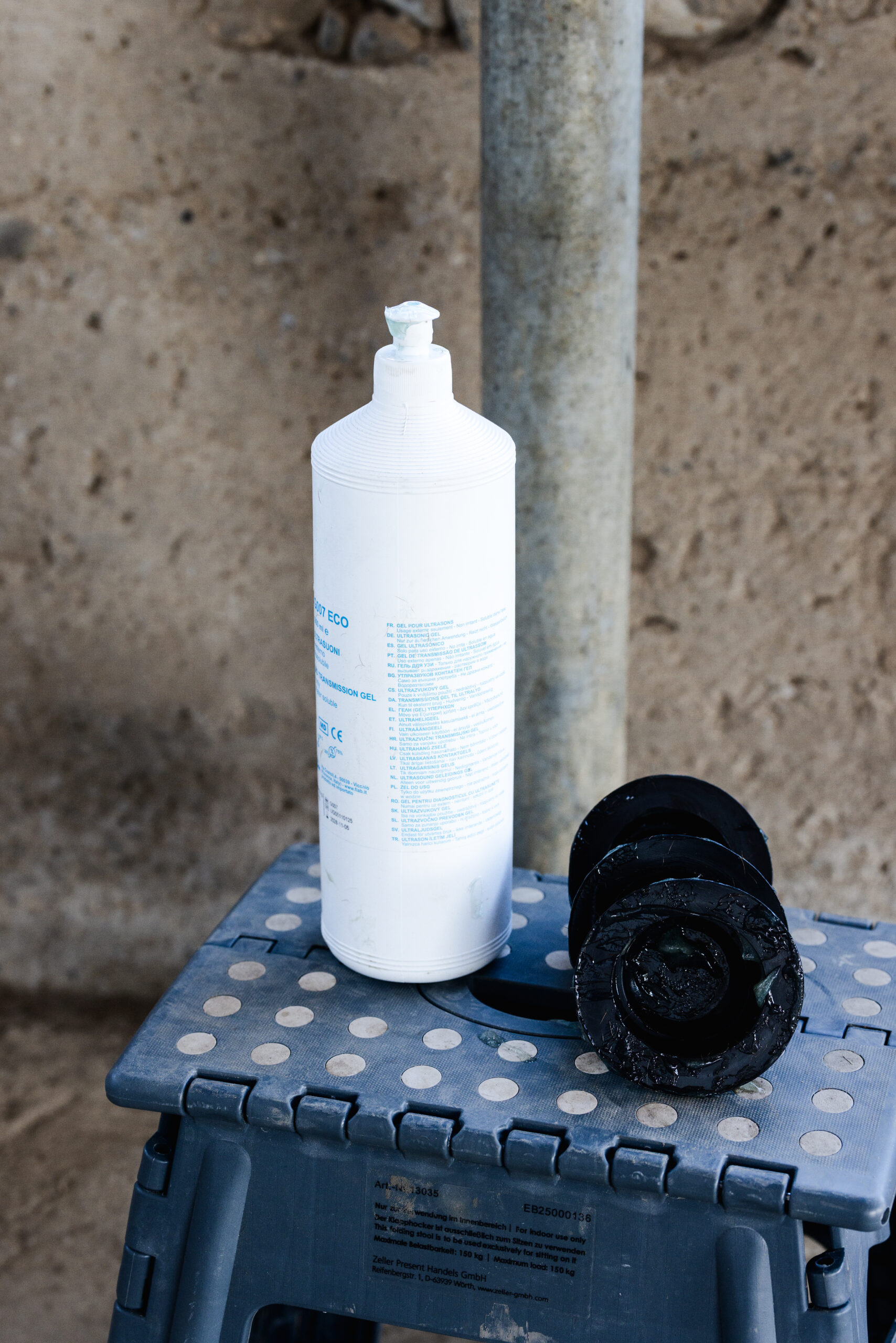
- Before the session, groom the horse so the coat is clean and dry, with no shine sprays; the therapist will add oil or gel only if the cups need it to seal [2].
- Tell the therapist about skin problems, recent injections, medication or pregnancy [6].
- The next day, look at the treated area: fading marks are normal; heat, swelling or scabs are a reason to call the therapist [6, 12].
2. Track whether it helps
- In the racehorse study the effect was measured within minutes [1], so judge cupping over several sessions, not by how the horse feels right after.
- Score the horse’s reaction to grooming, saddling and girthing on a simple 0–3 scale at the same time each day – a similar scale was used in the study [1].
- Film the horse at walk and trot before and after a series of sessions so the therapist can compare.
Cupping is not a miracle cure, and the evidence in horses is still thin: one small study showing short-term relief of back sensitivity. It can be a pleasant, safe addition to manual therapy – as long as it is part of a plan that includes your vet, your therapist, exercise and you.
References
- Nagahara R, Suganuma S, Tsuda T, Shibutani T, Enomoto S. Acute effects of dermal suctioning on back pain in racehorses: a pilot study. Comp Exerc Physiol. 2022;18(4):339-47. doi:10.3920/CEP220007
- Shawaf T, El-Deeb W, Hussen J, Hendi M, Al-Bulushi S. Evaluation of wet cupping therapy on the arterial and venous blood parameters in healthy Arabian horses. Vet World. 2018;11(5):620-6. doi:10.14202/vetworld.2018.620-626
- Miyata T, Shibayama Y, Kawai S, Watanabe A, Shibutani H, Shibutani T, Ishioka K. A pilot study of skin stretching and blood circulation effects of dermal suctioning in dogs. Res Vet Sci. 2024;166:105081. doi:10.1016/j.rvsc.2023.105081
- Zaifada AU, Akinbobola JS, Akindele AA, Akinbobola RIA. Effects of dry cupping on grimace scale of sheep infected with foot rot. J Vet Biomed Sci. 2024. Available at: citedrive.com
- Al-Bedah AMN, Elsubai IS, Qureshi NA, Aboushanab TS, et al. The medical perspective of cupping therapy: effects and mechanisms of action. J Tradit Complement Med. 2019;9(2):90-7. doi:10.1016/j.jtcme.2018.03.003
- Aboushanab TS, AlSanad S. Cupping therapy: an overview from a modern medicine perspective. J Acupunct Meridian Stud. 2018;11(3):83-7. doi:10.1016/j.jams.2018.02.001
- Wood S, Fryer G, Tan LLF, Cleary C. Dry cupping for musculoskeletal pain and range of motion: a systematic review and meta-analysis. J Bodyw Mov Ther. 2020;24(4):503-18. doi:10.1016/j.jbmt.2020.06.024
- Almeida Silva HJ, Barbosa GM, Scattone Silva R, Saragiotto BT, Oliveira JMP, Pinheiro YT, et al. Dry cupping therapy is not superior to sham cupping to improve clinical outcomes in people with non-specific chronic low back pain: a randomised trial. J Physiother. 2021;67(2):132-9. doi:10.1016/j.jphys.2021.02.013
- Jenkins LC, Verhagen AP, Amorim M, Cavanagh N, Henderson-Foley S, Larosa M, et al. The efficacy of dry cupping compared to placebo cupping for people with musculoskeletal complaints: a systematic review with meta-analysis. JOSPT Open. 2025. doi:10.2519/josptopen.2025.0159
- Volpato MP, Breda ICA, de Carvalho RC, de Castro Moura C, Ferreira LL, Silva ML, et al. Single cupping therapy session improves pain, sleep, and disability in patients with nonspecific chronic low back pain. J Acupunct Meridian Stud. 2020;13(2):48-52. doi:10.1016/j.jams.2019.11.004
- Enomoto S, Shibutani T, Akihara Y, Nakatani M, Yamada K, Oda T. Acute effects of dermal suction on passive muscle and joint stiffness. Healthcare (Basel). 2021;9(11):1483. doi:10.3390/healthcare9111483
- Al-Bedah AM, Shaban T, Suhaibani A, Gazzaffi I, Khalil M, Qureshi NA. Safety of cupping therapy in studies conducted in twenty one century: a review of literature. Br J Med Med Res. 2016;15(8):1-12.
- Haussler KK. Pressure algometry for the detection of mechanical nociceptive thresholds in horses. Animals (Basel). 2020;10(12):2195. doi:10.3390/ani10122195
- Riccio B, Fraschetto C, Villanueva J, Cantatore F, Bertuglia A. Two multicenter surveys on equine back-pain 10 years a part. Front Vet Sci. 2018;5:195. doi:10.3389/fvets.2018.00195
- Jeffcott LB. Disorders of the thoracolumbar spine of the horse – a survey of 443 cases. Equine Vet J. 1980;12(4):197-210. doi:10.1111/j.2042-3306.1980.tb03427.x
- Pilati N, Pressanto MC, Palumbo Piccionello A, De Angelis Corvi F, Beccati F. Impinging and overriding spinous processes in horses: a narrative review. Animals (Basel). 2025;15(18):2679. doi:10.3390/ani15182679